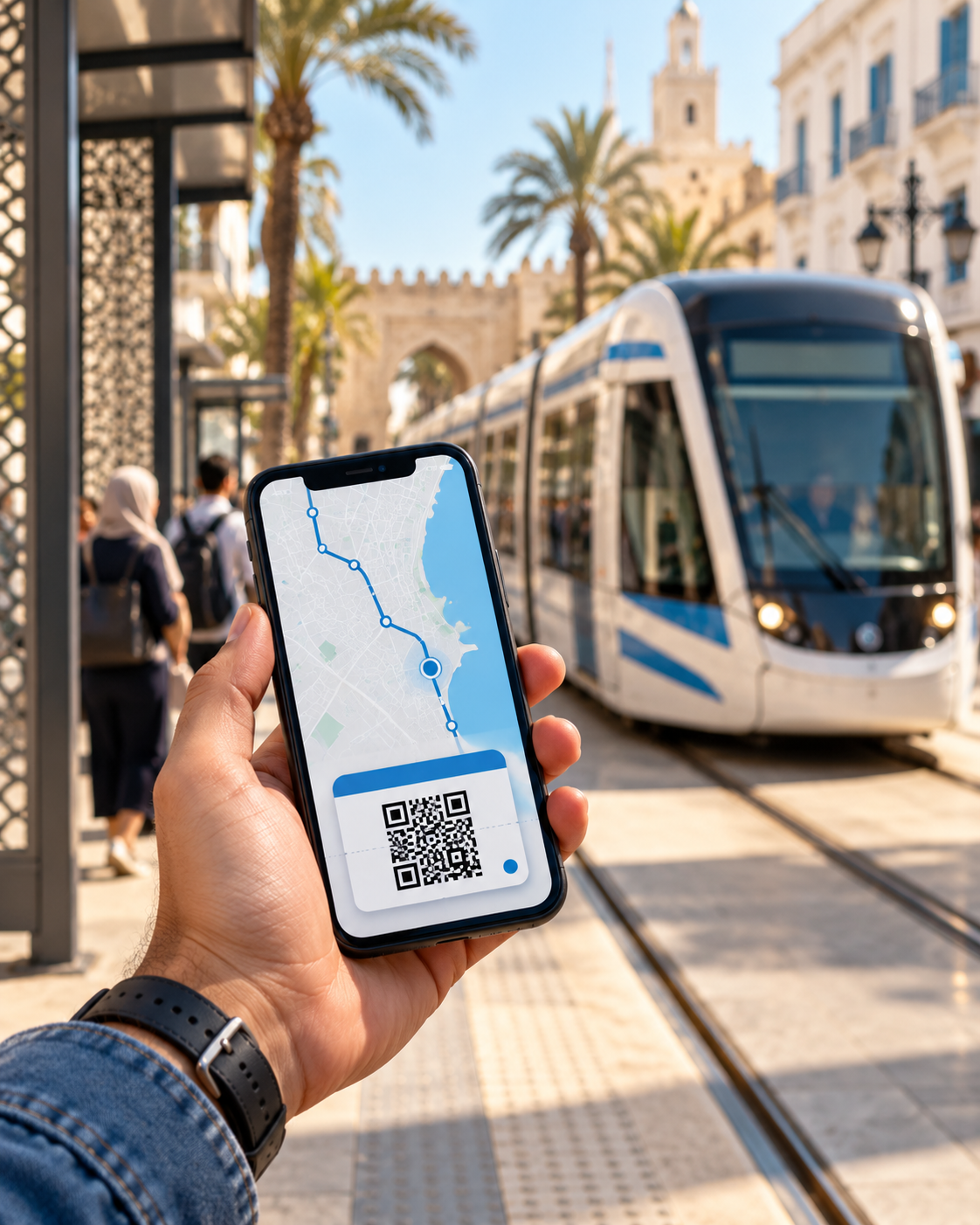
AI-generated cover illustration. Project screens are shown below.
Confidence while the city moves.
An independent concept organizing route guidance and digital tickets around the rider’s next decision.
Independent product concept
01 / Problem & scope
Make the next travel decision understandable.
Transitun is an independent mobility concept exploring route guidance and digital tickets. The working hypothesis: a rider needs to identify the next stop, transfer or ticket action without repeatedly reconstructing the whole journey.
I defined the information architecture and designed the account, ticket and navigation interfaces. The supplied screens are concept deliverables; no field research, live transport integration or deployed service is claimed.
02 / Journey decisions
Separate planning, travel and ticket use.
I organized tickets and subscriptions as a dedicated task area, with route navigation and tracking in the travel experience. The design intent is to keep fare selection, ticket ownership and presenting a ticket distinct.
Account entry is part of the illustrated flow. The tradeoff is that mandatory sign-up could interrupt route exploration; I would test access to route discovery before requiring an account.
The screens below show the proposed structure and visual hierarchy. Reduced rider stress is an intended benefit, not a measured outcome.
03 / System & dependencies
Make status as clear as navigation.
Repeated cards, icons and action hierarchy connect the ticket and navigation screens. Consistency should support recognition after the rider puts their phone away and returns to the task.
Live tracking depends on a real data source. Before production, the design needs to distinguish scheduled information from live updates, show freshness and provide a fallback. Ticket validity and service interruptions also need explicit states.
04 / Outcome & next test
A testable concept, not a proven service.
The concept translates a travel-confidence hypothesis into a connected set of screens. Its value is the proposed separation of rider decisions and a consistent interface across those tasks.
Test an unfamiliar route, a transfer and ticket retrieval with representative riders. Include a missed connection and unavailable live data. Observe incorrect choices and requests for reassurance, then revise the hierarchy before claiming improved confidence.
The first gesture
Have a good challenge?Let’s talk.